
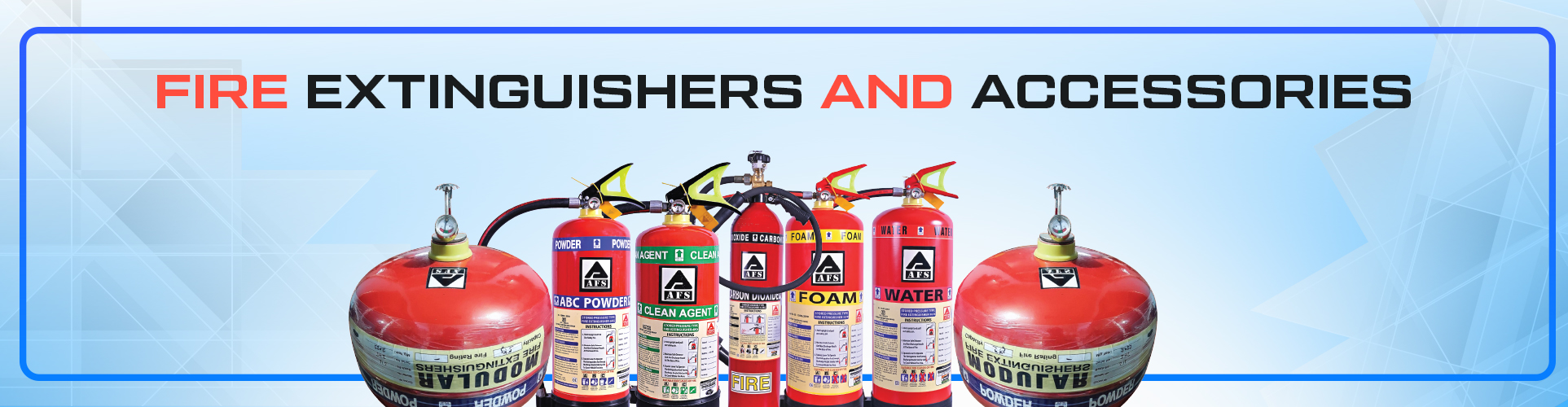


Fire Extinguishers
Fire extinguishers are essential safety devices designed to control or extinguish small fires before they become dangerous. Whether in homes, offices, factories, or commercial spaces, having the right fire extinguisher can save lives and protect valuable assets.
What is a Fire Extinguisher?
A fire extinguisher is a portable device that releases a substance to put out a fire. It works by removing one or more elements of the fire triangle—heat, oxygen, or fuel—thereby stopping combustion.
Types of Fire Extinguishers
Different types of fire extinguishers are designed for specific fire classes:
1. Water Fire Extinguishers
- Best for: Class A fires (wood, paper, cloth)
- Common use: Homes, schools, offices
- Not suitable for electrical or flammable liquid fires
2. Foam Fire Extinguishers (AFFF)
- Best for: Class A & B fires (solids and flammable liquids)
- Use: Warehouses, petrol pumps, garages
- Forms a layer that prevents re-ignition
3. Carbon Dioxide (CO₂) Extinguishers
- Best for: Electrical and flammable liquid fires (Class B & C)
- Use: Server rooms, offices, labs
- Leaves no residue, safe for electronics
4. Dry Chemical Powder (ABC) Extinguishers
- Best for: Class A, B & C fires
- Use: Homes, vehicles, industries
- Most versatile and widely used extinguisher
5. Wet Chemical Extinguishers
- Best for: Kitchen fires (Class K/F)
- Use: Restaurants, commercial kitchens
- Forms a cooling, soapy layer on burning oil
6. Class D Fire Extinguishers
- Best for: Metal fires (magnesium, aluminum, etc.)
- Use: Factories and laboratories
Fire Classes
Understanding fire classes helps in choosing the right extinguisher:
- Class A – Solid materials (wood, paper, cloth)
- Class B – Flammable liquids (petrol, oil, paint)
- Class C – Electrical equipment
- Class D – Combustible metals
- Class K/F – Cooking oils and fats
Importance of Fire Extinguishers
Fire extinguishers play a critical role in safety:
- Provide immediate response during fire emergencies
- Prevent fire from spreading
- Reduce property damage
- Save lives and ensure workplace safety
- Help comply with fire safety regulations
How to Use a Fire Extinguisher (PASS Technique)
Follow the PASS method for effective use:
- P – Pull the safety pin
- A – Aim at the base of the fire
- S – Squeeze the handle
- S – Sweep side to side
Maintenance & Safety Tips of Fire Extinguisher
- Regularly inspect extinguishers for pressure and damage
- Keep them easily accessible and visible
- Train staff or family members on usage
- Service and refill as per guidelines
- Replace expired or damaged units
Why to Choose AFS Fire Safety?
When it comes to reliable fire protection solutions, AFS Fire Safety stands out as a trusted name in the industry.
1. Wide Range of Fire Safety Products
AFS Fire Safety offers a complete range of fire extinguishers including ABC, CO₂, foam, and more to suit all types of fire risks.
2. Quality & Certified Equipment
All products meet industry standards and ensure maximum performance and reliability during emergencies.
3. Expert Guidance
Their experienced team helps you choose the right fire safety equipment based on your specific requirements.
4. Affordable Pricing
Competitive pricing ensures that safety remains accessible without compromising on quality.
5. Installation & Maintenance Services
AFS Fire Safety provides end-to-end solutions including installation, inspection, refilling, and servicing.
6. Customer Satisfaction
With a strong focus on safety and service, AFS Fire Safety is committed to protecting lives and property.

