
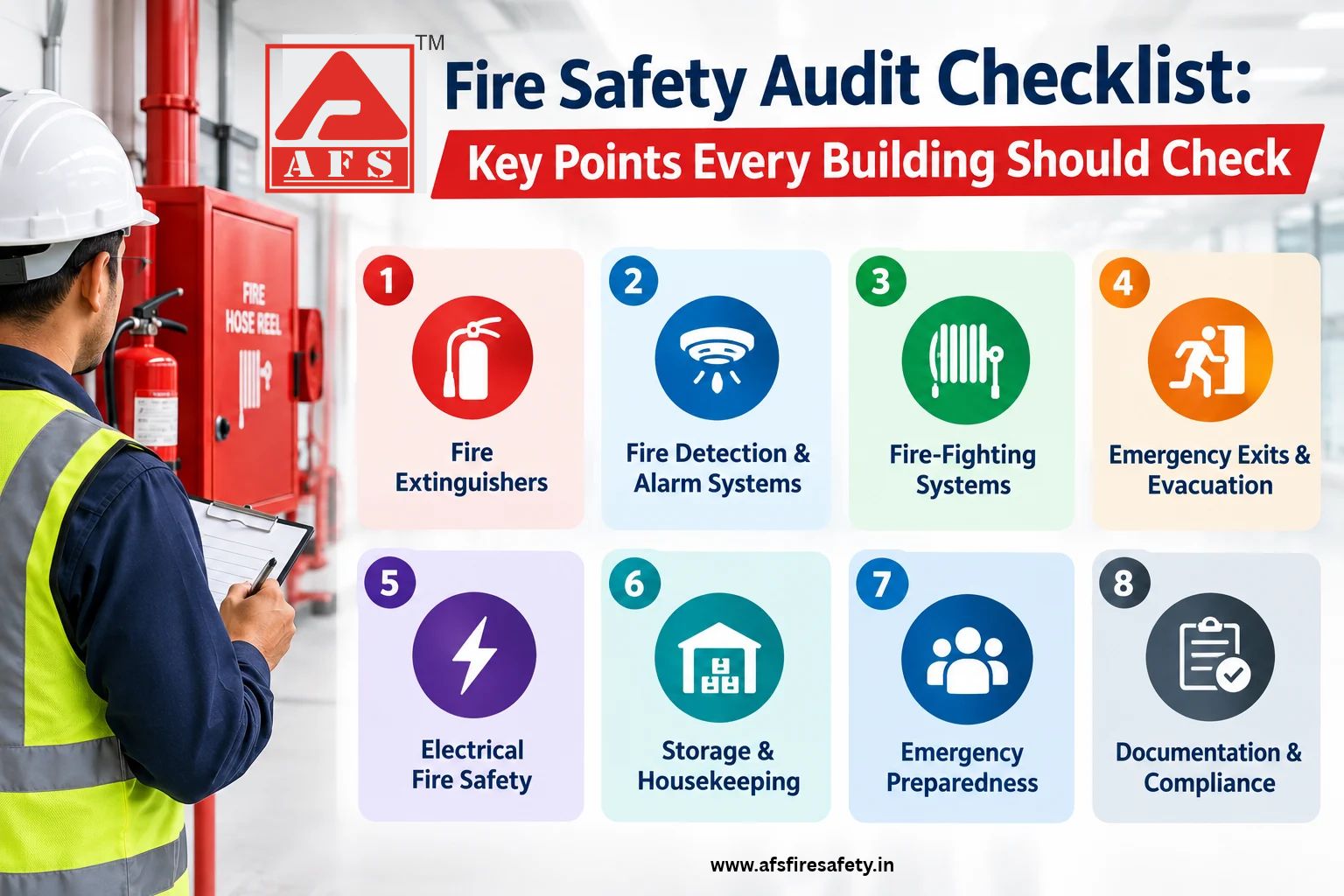
The Fire Safety Audit is a comprehensive examination of all fire safety features of a building. AFS Fire Safety can assist in detecting equipment problems, unsafe conditions, and evacuation planning deficiencies prior to them causing a fire emergency. The following topics must be covered in a realistic fire safety audit.
Key Points For Fire Safety Audit Checklist:
-
Fire Extinguishers:
Verify that extinguishers suit the fire risks present and are installed in adequate numbers.
- Correct extinguisher type, capacity, and quantity
- Clearly visible and readily accessible locations
- Pressure gauge and operating condition checked
- Inspection, servicing, and refilling dates updated
- No corrosion, leakage, or physical damage
-
Fire Detection & Alarm Systems:
Early detection is critical for initiating evacuation and firefighting measures.
- Smoke and heat detectors tested for operation
- Manual call points accessible and functional
- Fire alarm audibility checked throughout the premises
- Fire alarm control panel operating correctly
- Testing and preventive-maintenance records maintained
-
Fire-Fighting Systems:
Fixed fire-fighting infrastructure should remain operational and accessible at all times.
- Hydrants and hose reels free from obstruction
- Sprinkler systems inspected and maintained
- Fire pumps tested for required operating performance
- Dedicated and adequate fire-water supply available
- Fire valves identified, accessible and properly maintained
For larger commercial and industrial buildings, the audit should also examine whether the installed fire-fighting system is appropriate for the building’s occupancy, height, area and fire load.
-
Emergency Exits & Evacuation:
A functional fire protection system must be supported by safe evacuation routes.
- Exit signage clearly visible
- Escape routes free from storage and obstruction
- Emergency lighting operational
- Exit doors maintained for safe and rapid evacuation
- Evacuation plans displayed at suitable locations
-
Electrical Fire Safety:
Electrical faults are a significant source of fire risk and require regular inspection.
- Electrical panels maintained and properly identified
- No exposed, loose, or damaged wiring
- Circuits protected against overloading
- Earthing system inspected
- Electrical rooms kept free of combustible storage
-
Storage & Housekeeping:
Good housekeeping reduces combustible loading and helps maintain clear access to safety systems.
- Flammable substances stored in designated areas
- Combustible waste removed regularly
- Fire equipment and exits kept unobstructed
- LPG, fuel and other hazardous materials stored as required
-
Emergency Preparedness:
Equipment alone cannot ensure an effective emergency response.
- Written emergency response plan available
- Fire drills conducted periodically
- Employees trained in basic fire response and extinguisher use
- Emergency contact information displayed
- Designated and trained fire-safety personnel available
-
Documentation & Compliance:
Every audit should conclude with proper documentation and corrective-action tracking.
- Equipment inspection and maintenance records
- Relevant maintenance certificates
- Fire-drill records
- Applicable fire approvals/NOCs
- Previous audit observations and corrective actions followed up
Conclusion:
The fire safety audit is supposed to be considered a continuous risk management activity and not just a one-time activity aimed at compliance. Conducting inspections in terms of detection and suppression systems, electrical safety, evacuation procedures, and emergency preparedness will enable building owners to discover vulnerabilities in their systems. A professional fire-safety audit can also assist in determining if the system suits the building in question.

