
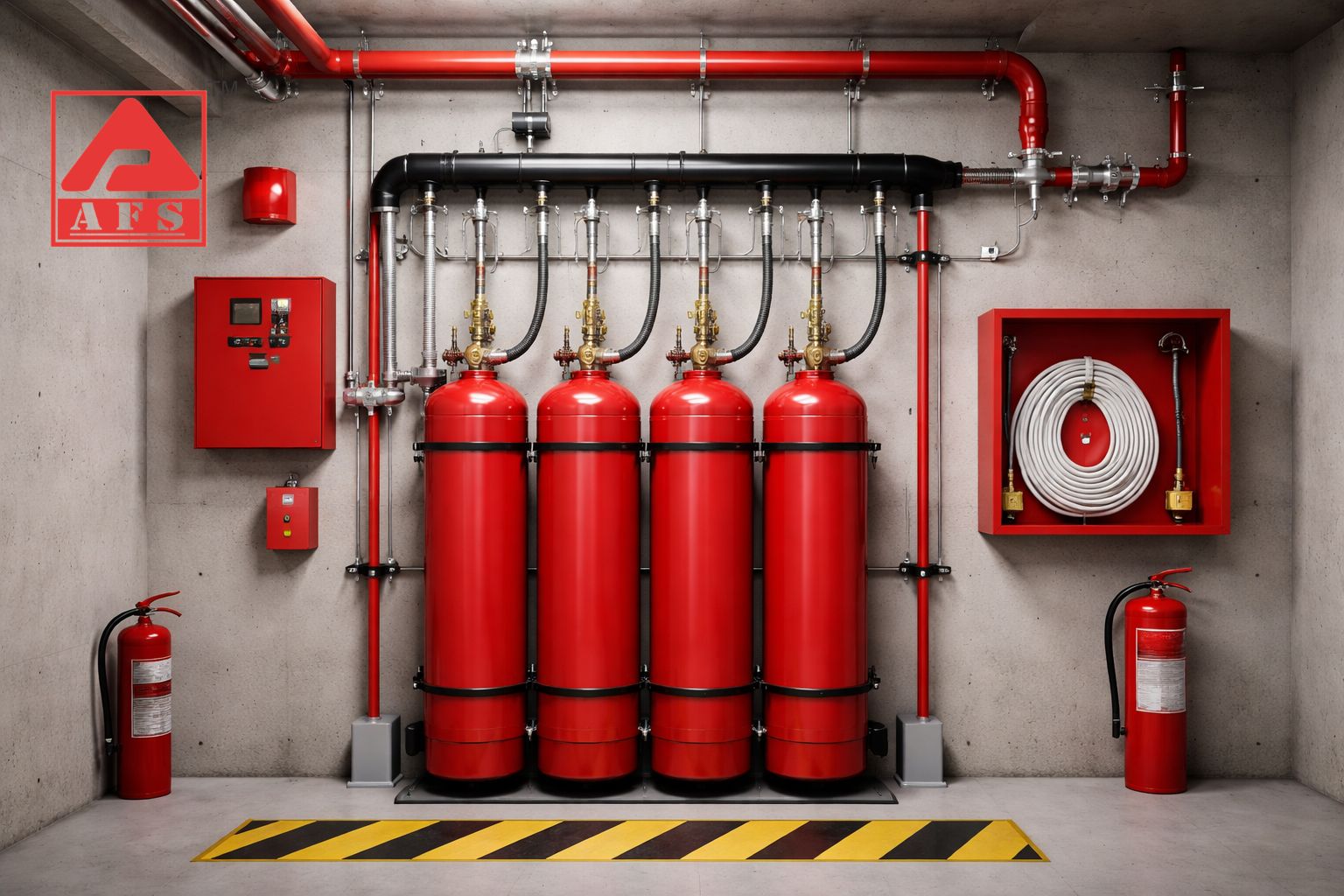
Fire dangers present a significant threat to life, assets and business activities. This is where a fire suppression system is essential. It is engineered to identify and suppress fires automatically, as these systems are crucial for modern safety frameworks in various sectors, office buildings and residential areas.
This blog by AFS Fire Safety will examine the functioning of a fire suppression system, as its part, varieties and its necessity as a safety measure.
What is a Fire Suppression System?
A fire suppression system is an advanced fire safety solution that identifies fire in tis initial stages and extinguishes it by using specialized agents like gas, chemicals or water mist. In contrast to traditional sprinkler system, this system helps in aiming to reduce harm while efficiently managing fire incidents. These systems are commonly used in environments where water-based systems which might not be appropriate such as data centres, server rooms, kitchen and industrial facilities.
How Does a Fire Suppression System Work?
This system by AFS Fire Safety operates through a combination of detection, activation and suppression. Here are the steps of fire suppression system:
- Fire Detection: The system is equipped with sensors that can detect early signs of fire, such as:
- Heat
- Smoke &
- Flame
This advanced system uses multi-sensor technology to ensure accurate and rapid detection.
2. Control Panel Activation: As the sensor detect a fore, as the signal is sent tio the control panel, which acts as the brain of the system. The control panel manages:
- Analyse the signal
- Activate alarm
- Activates the suppression system
3. Alarm & Warning: Before releasing the suppression agent, the system often activates:
- Audible alarms
- Visual alerts
This allows customers to evacuate safely before the system discharges.
4. Release of Suppression Agent: The fire suppression system releases the fire-suppressing agent through nozzles or piping networks. By depending on the system type, it may use:
- Clean agents
- CO2 gas
- Dry chemicals
- Water mist
These agents work by cooling the fire, displacing oxygen or interrupting the chemical reaction of combustion.
5. Fire Control & Extinguishing: The suppression agents quickly controls and extinguishes the fire, by preventing it from spreading & reducing potential damage.
Key Components of a Fire Suppression System:
A typical fire suppression system consists of:
- Detection devices
- Control panel
- Suppression agent storage
- Piping network
- Discharge nozzles
- Alarm System
Types of Fire Suppression Systems:
With the changing environment need we require different suppression system. The common types include:
- Gas based fire suppression systems: It uses clean agents or inert gases extinguish fire without leaving residue.
- Water Mist Systems: This system by AFS Fire Safety uses fine water droplets to cool and suppress the fire with minimal water damage.
- Foam fire suppression system: This creates a foam blanket that suppresses flammable liquid fires.
- Dry Chemical Systems: It is effective for industrial applications and kitchens, as it is especially for grease fire.
Benefits of Fire Suppression Systems:
Installing a fire suppression system offers a multiple advantage like:
- Early fire detection
- Minimal damage
- Automatic operation
- Protection of assets
- Meet the safety standards
Why Fire Suppression Systems are Essential?
In fast changing industrial and commercial environment, fire risks are higher than ever. A fire suppression system ensures:
- Business continuity
- Employee safety
- Less operation time
- Protection of valuable infrastructure
Industries such as manufacturing, IT, healthcare, hospitality and energy rely mainly on these systems to maintain safety standards.
Top Fire Suppression System by AFS Fire Safety:
When it comes to reliable fire protection, by choosing the right provider is crucial. AFS Fire Safety offers:
- Advanced and customized fire suppression solution
- High-quality equipment with industry standards
- Expert installation and maintenance services
- Cost-effective and reliable systems
- Strong focus on safety and customer satisfaction
Our expertise ensures that your property is equipped with the most effective fire protection system.
Frequently Asked Question:
- What is the primary function of a fire suppression system?
The primary goal is to identify and reduce fires automatically, reducing damage and promoting safety. - What distinguishes a fire suppression system from a sprinkler system?
Fire suppression systems use agents like gas or chemicals, whereas sprinkler systems mainly rely on water. - In what locations are fire suppression systems typically utilized?
They are used in data centres, industrial facilities, kitchens, server spaces and commercial structures. - Are fire suppression systems human-friendly?
Indeed, the majority of systems uses non-harmful substances and offer alert signals preceding to release to ensure safe evacuation. - How frequently should a fire suppression system be serviced?
The routine maintenance is advised as a minimum of once or twice annually, based on usage and guidelines. - What kind of fire suppression system is the most effective?
The optimal system relies on the surroundings and the level of fire hazard. The clean agent systems are well-suited for electronics, whereas foam systems are appropriate for flammable liquids.

