
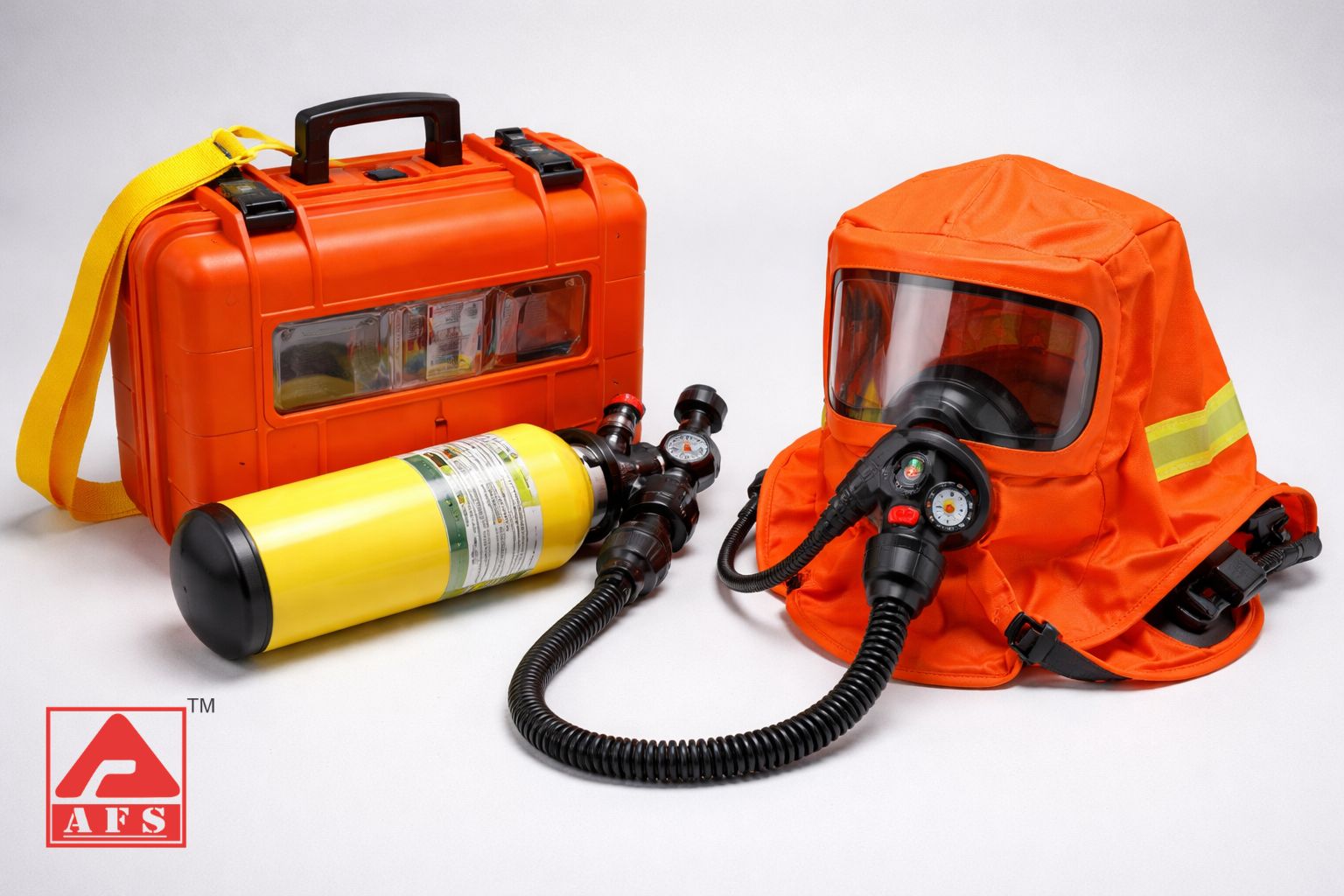
In emergencies like fires, gas leaks or chemical spills, the air can turn unsafe to breathe very quickly. Smoke, harmful fumes, or oxygen-deficient environments can endanger lives within minutes. In such situations, having safety equipment that offers quick respiratory protection is critical. An emergency escape breathing apparatus, also known as an emergency escape breathing device, is specifically designed to help individuals safely exit hazardous environments.
It is a portable breathing device that provides breathable air for a limited duration, enabling users to escape dangerous areas. This device by AFS Fire Safety is widely used in industries such as marine, oil & gas, chemical plants, and power plants, where exposure to smoke or toxic gases is a constant risk.
Understanding Emergency Escape Breathing Device
An Emergency Escape Breathing Device (EEBD) is designed purely for escape purposes. Unlike self-contained breathing apparatus used by firefighters or rescue teams, an EEBD is not intended for rescue operations or prolonged use. Instead, it provides a short-duration supply of breathable air, allowing the user to reach a safe location.
This device is compact, lightweight, and easy to use, making it highly effective during emergencies. Since emergencies demand quick action, the emergency escape breathing apparatus is designed to be used even without specialized training.
Key Components of an EEBD
- Compressed Air Cylinder: Stores clean, breathable air that is released when the device is activated.
- Breathing Mask: Covers the head and creates a sealed breathing environment, preventing toxic gases or smoke from entering.
- Pressure Regulator: Controls airflow to ensure a steady and reliable supply of air.
- Carrying Case: Protects the device and allows quick access during emergencies.
All these components work together to ensure that the emergency escape breathing apparatus performs efficiently when needed.
How Emergency Escape Breathing Apparatus Works
In an emergency, the user removes the device from its case and places the breathing hood over their head. Once activated, the EEBD begins supplying breathable air from the compressed cylinder.
The hood is designed to maintain positive pressure, which prevents contaminated air from entering. This ensures the user continues to receive clean air while evacuating the area safely.
Most EEBD systems provide breathable air for approximately 10 to 15 minutes—typically enough time to exit the hazardous zone.
Importance of EEBD in Industrial Safety
In high-risk environments where exposure to fire, smoke, or toxic gases is possible, EEBDs play a critical role in safety preparedness. They provide workers with a dependable way to escape without inhaling harmful substances.
- Protects workers from toxic fumes and smoke
- Enables safe and quick evacuation during emergencies
- Reduces the risk of respiratory injuries
- Helps meet industrial and maritime safety regulations
Conclusion
The Emergency Escape Breathing Device (EEBD) is essential equipment in environments where air contamination is a risk. AFS Fire Safety solutions provide a temporary supply of breathable air, allowing individuals to safely escape situations involving smoke, toxic gases, or low oxygen levels. Installing and maintaining an emergency escape breathing apparatus in the workplace is a crucial step toward ensuring safety and emergency preparedness.

